



Know who needs you most
Every assessed patient gets a probability of an unfavourable treatment outcome, so follow-up time goes to the patients most likely to need it.
Breathing in
Checking the pulse
Screening the sample
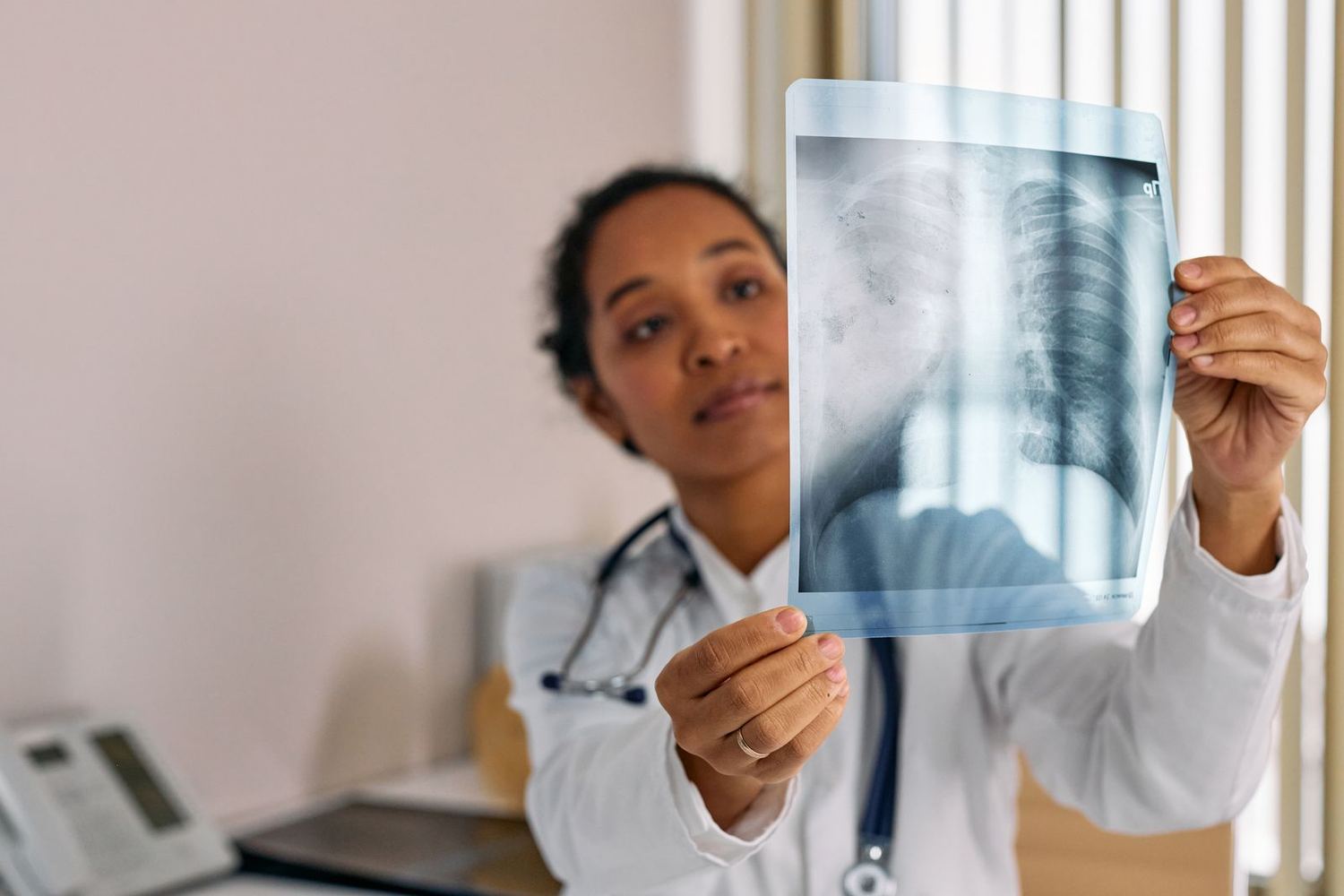
Reading the X-ray
Tracking the treatment
AI-powered risk prediction for TB treatment outcomes helps clinicians identify high-risk patients early and improve care across Kenya.
Risk of Unfavourable Outcome
32%
Moderate riskEarly intervention recommended
Most patients finish TB treatment well. The ones who do not — who die, fail treatment or are lost to follow-up — are usually easier to reach early than late. TB Predict helps find them early.
Every assessed patient gets a probability of an unfavourable treatment outcome, so follow-up time goes to the patients most likely to need it.
Several trained models are kept ready. Each patient is routed to the one that performs best for patients like them, and the reason is recorded with the prediction.
Predictions are compared with the outcomes recorded in the TB register, and with the existing TIBU risk score, before anyone is asked to rely on them.
Where the model works and where it does not: a threshold explorer, subgroups, extreme cases, and the TIBU score side by side.
One filter bar over every assessment: the Kenya map, the risk mix, trends over time and the facilities carrying the load.
Every assessment recorded for a patient, their risk over time, and the TIBU score beside the platform's own.
Patients flagged at high risk become a worklist for their facility: pending, contacted, resolved and overdue.
Five short steps and a review before scoring. Only age, sex and county are required; anything not yet known can be left blank.
Every clinical read and write goes through a standards-based API, so other health systems can use exactly what this site uses.
Watch one patient move through the platform.
Step 1 of 4 · Assess
A clinician enters the patient's registration details — or updates them when the month-2 smear result comes in.
The patient is routed to the best-suited model, which returns a probability, a risk band and why that model was chosen.
High-risk patients are flagged, and a follow-up is raised on their facility's worklist.
As outcomes are recorded, predictions are compared with what actually happened, model version by model version.
Clinical systems read patients, observations and predictions as standard FHIR resources, and request a prediction with a single operation. Access is limited to each caller's facility, county or national scope, and every read is audited.
POST /fhir/Patient/$predict-outcome
Authorization: Bearer <token>
Content-Type: application/fhir+json

HTTP/1.1 200 OK
{
  "resourceType": "Parameters",
  "parameter": [
    { "name": "riskAssessment",
      "resource": { "resourceType": "RiskAssessment", … } },
    { "name": "task", … }
  ]
}Accounts are for TB programme staff at facility, sub-county, county and national level. Every request is reviewed by a super-administrator, and you are emailed the decision.
The FHIR API documentation lists every endpoint, with example requests and responses. Definitional endpoints can be explored without an account.